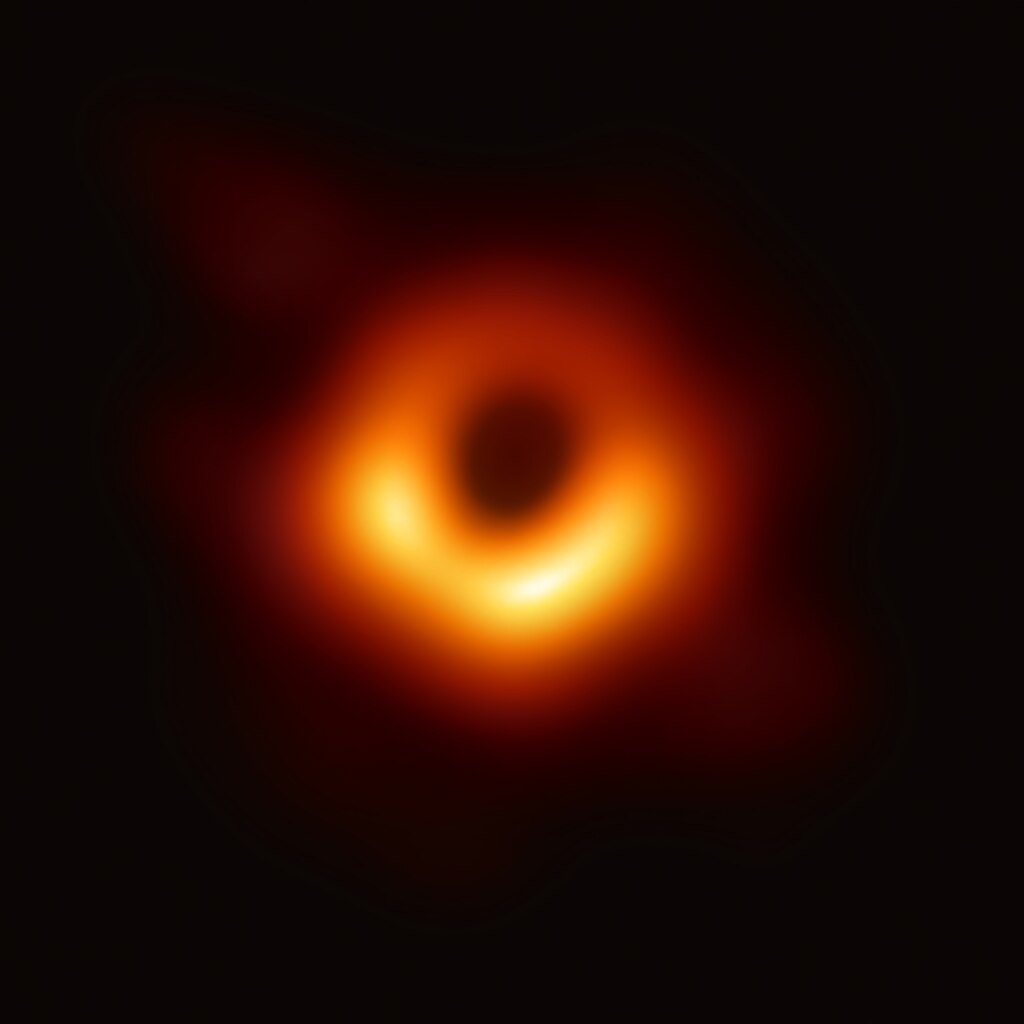
we had this question today: let's put a mirror on the event horizon, is the light absorbed or reflected? my simulation ;)
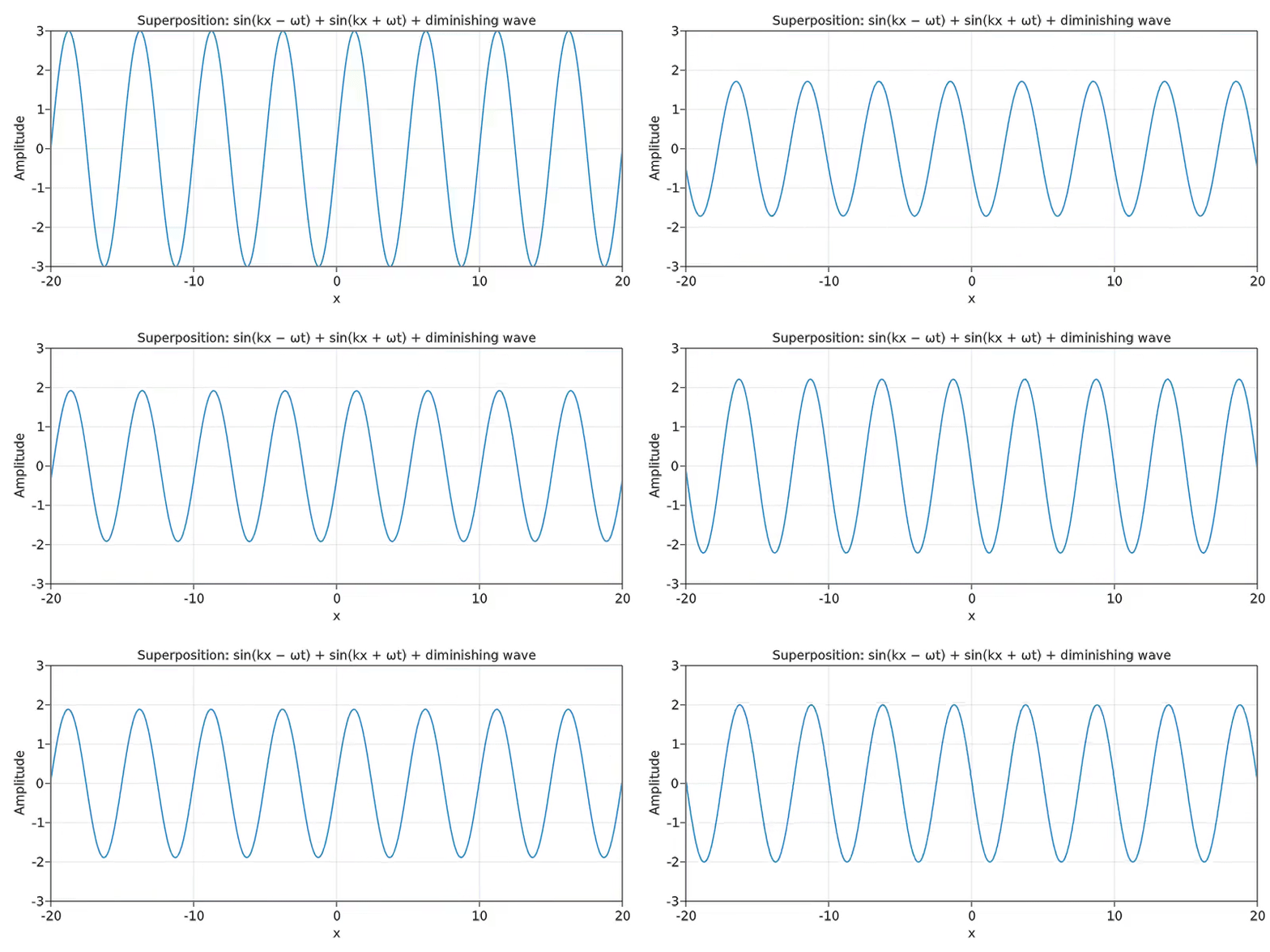
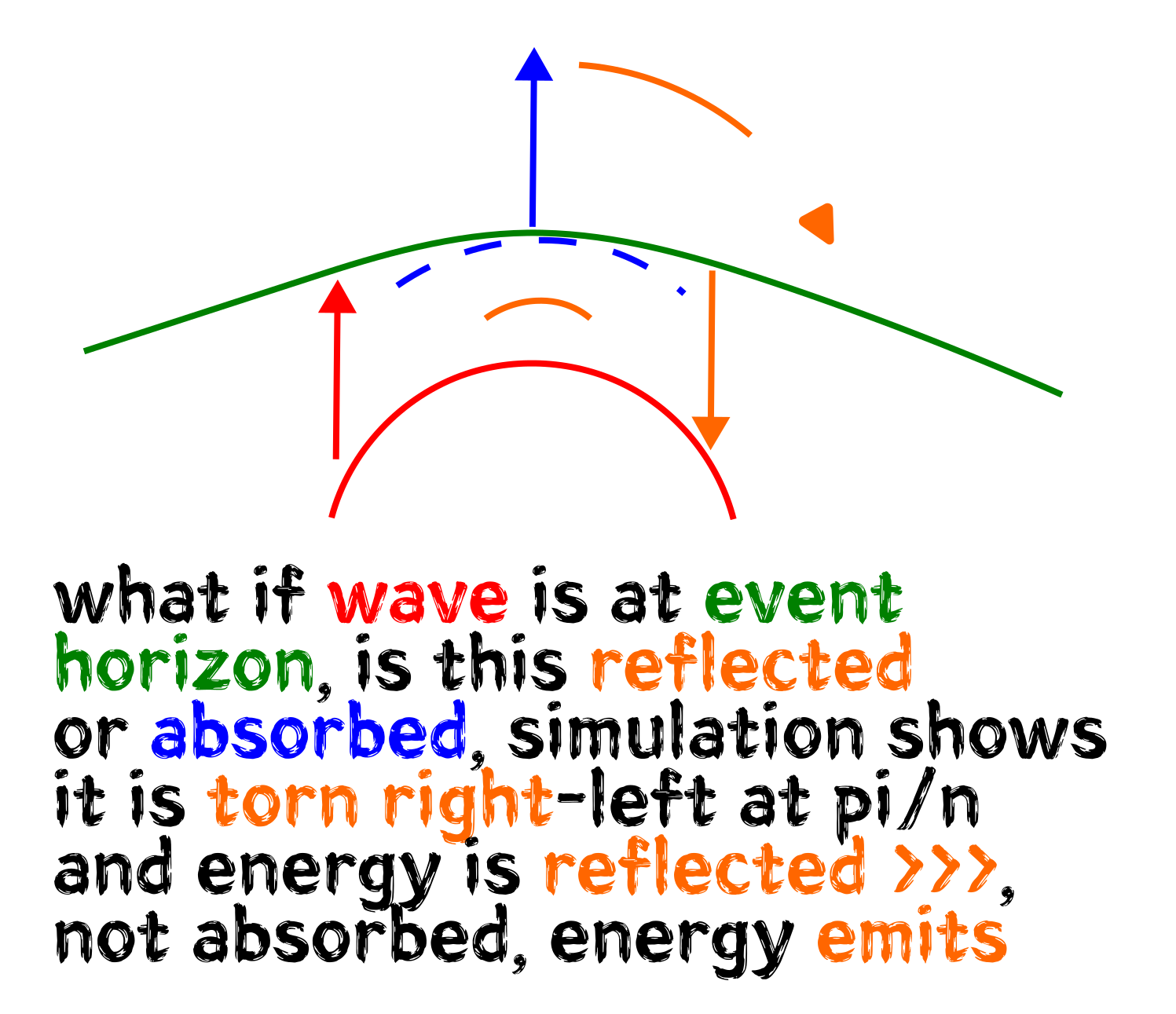 Today let's look at animation upperwise and we see computer shows if a wave is reflecting and also being absorbed at event horizon it torns wave a bit left-right at pi/n ratio, which means this is reflected at event horizon via absorbtion. Which is only law of preserving of energy. This wave is not diminished without pushing energy around into the space. So final answer: Yes the wave at event horizon is REFLECTED, not absorbed ^^^
# Julia script: Two counter-propagating sin waves with interactive cancellation
# Requirements: Julia (1.8+), GLMakie
# Install required package in Julia REPL if needed:
import Pkg; Pkg.add("GLMakie")
Pkg.add("AbstractPlotting")

using GLMakie
using AbstractPlotting: lift

A = 1.0
k = 2pi / 5
ω = 2pi / 2
m = 0.3
y_max = 1.0

L = 20.0
N = 800
x = range(-L, L; length=N)

t = Observable(0.0)

combined = lift(t) do tt
    y1 = A .* sin.(k .* x .- ω .* tt)
    y2 = A .* sin.(k .* x .+ ω .* tt)
    attenuation = exp(-0.5 * tt)  # exponenciálny útlm, časová konštanta 2s
    y3 = y_max * attenuation .* sin.(k .* x .- m .* ω .* tt)
    y1 .+ y2 .+ y3
end

fig = Figure(resolution = (800, 400))
ax = Axis(fig[1, 1], xlabel="x", ylabel="Amplitude",
          title="Superposition: sin(kx − ωt) + sin(kx + ωt) + diminishing wave")

linesplot = lines!(ax, x, combined)

limits!(ax, -L, L, -3*A, 3*A)  # navýšený limit y pre zobrazenie y3

fps = 60
dt = 1/fps

record(fig, "animation7c.gif", 1:300; framerate=fps) do i
    t[] = (i-1)*dt
end
Well guys for this final code we don't have ebooks or our minds, we have just prompts these days to see final outcome. Thanks gpt and perplexity ^^^
It should be this way as light is dispersed at the edge of blackhole and we see 2 maximum and minimum via telescope, which is exactly this ^^^ simulation, the picture: